电热展Vacuum Cleaning Furnaces

VACUUM PYROLYSIS CLEANING

Remove polymer residues.Start with the component.

Compare vertical and horizontal loading arrangements for suitable heat-resistant metal spinnerets, filters, dies and other components.

02
Loading types
06
Input groups
3D structure explorerVacuum cleaning furnace

Drag to rotate · Typical structure shown; actual configuration varies.

PRODUCT MATRIX

Two arrangements, different loading

Compare working dimensions, fixture load and available space for each loading arrangement.
01
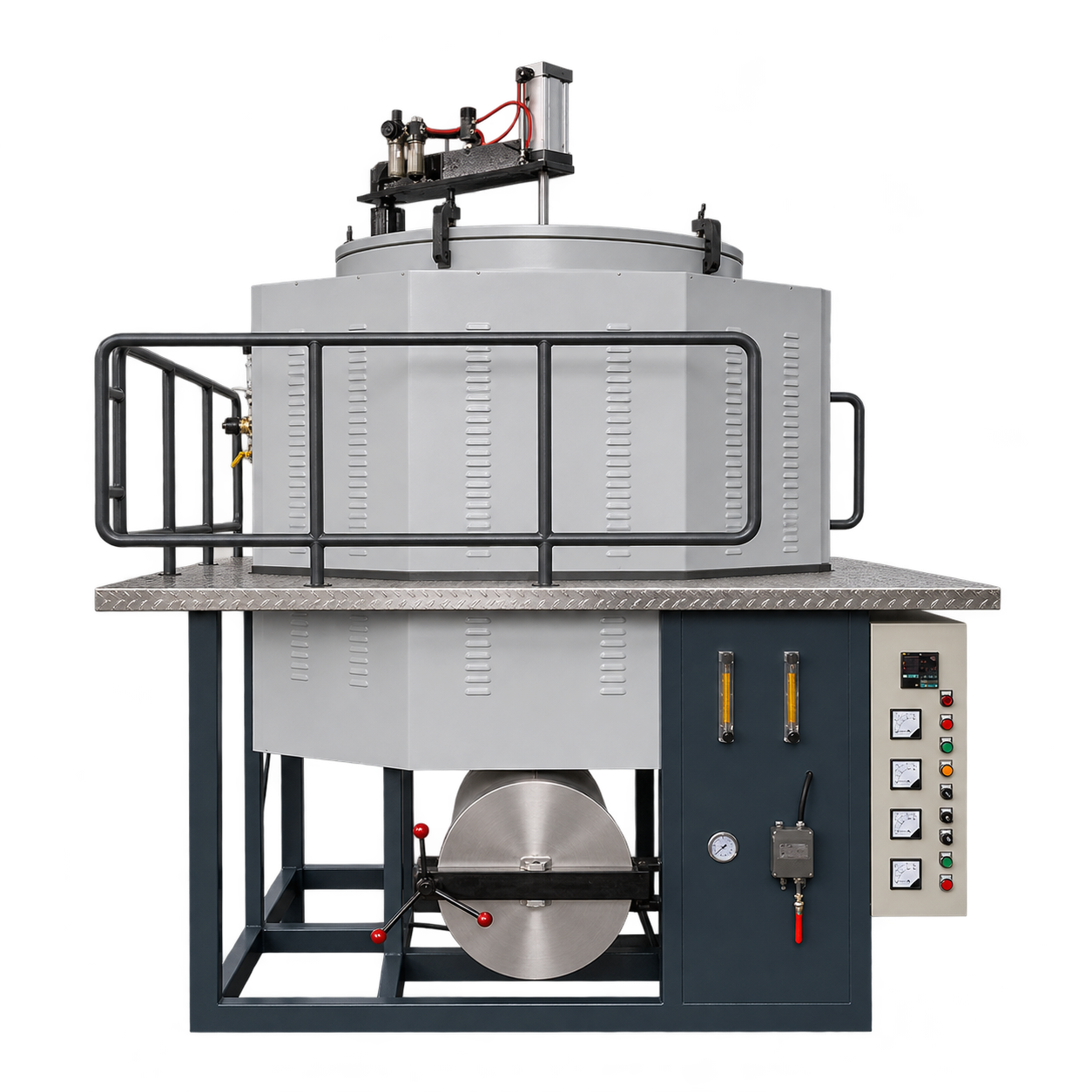
Vertical vacuum cleaning furnace
VERTICAL / VACUUM CLEANING

01 / LOADING ARRANGEMENT

Vertical vacuum cleaning furnace

Top loading with baskets or lifting fixtures. Check usable diameter, height and overhead clearance rather than the external envelope.
  • Usable diameter, height and basket space
  • Total component and fixture mass
  • Lid opening, lifting and maintenance clearance
02
Horizontal vacuum cleaning furnace
HORIZONTAL / VACUUM CLEANING

02 / LOADING ARRANGEMENT

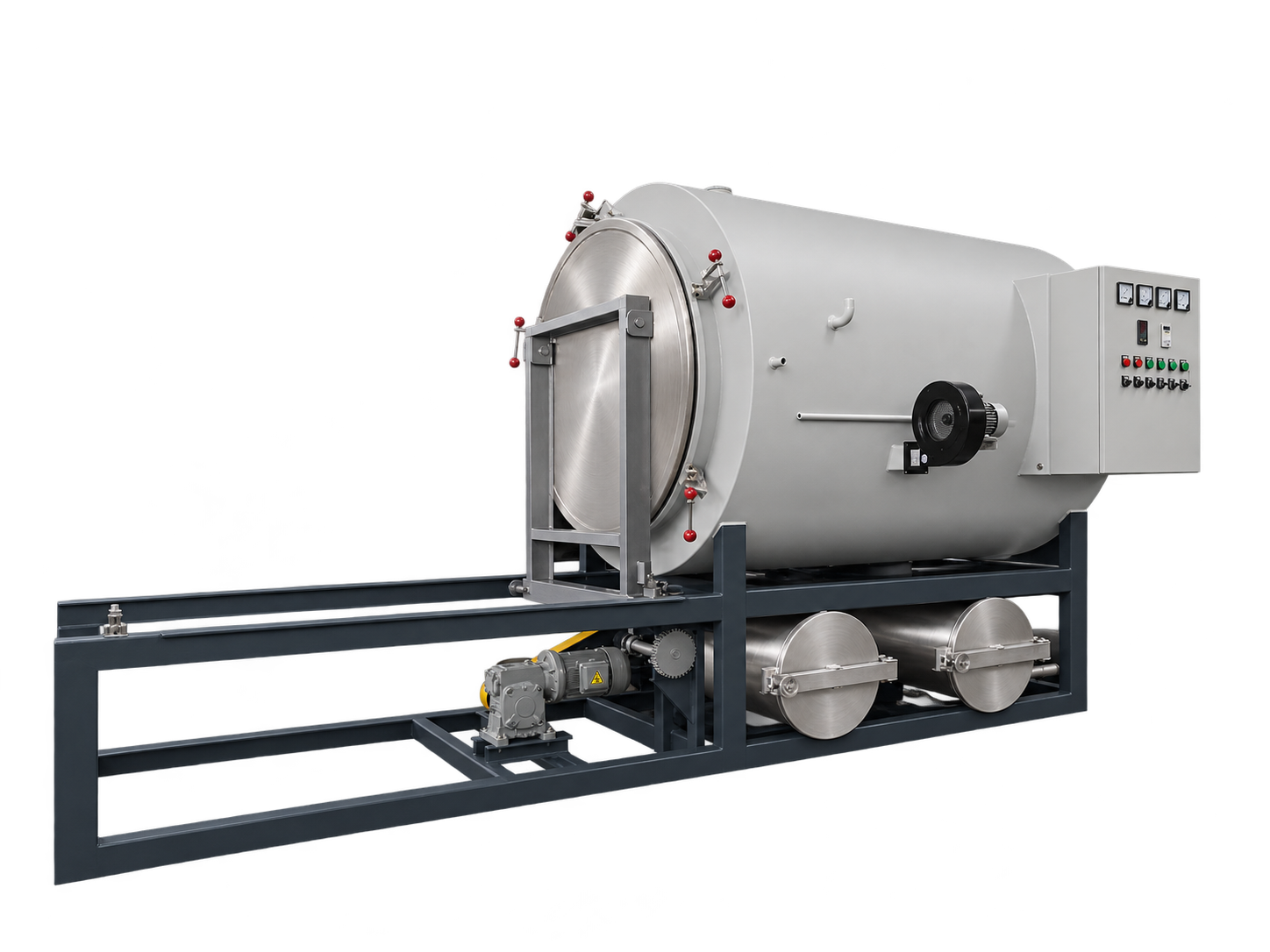
Horizontal vacuum cleaning furnace

Front loading with rails or fixtures. Check usable diameter, length, support and withdrawal travel for long parts or assemblies.
  • Usable diameter, length and door clearance
  • Rail, support and fixture loading
  • Front withdrawal and handling space

STRUCTURE COMPARISON

Start with component handling

CheckVertical vacuum cleaning furnaceHorizontal vacuum cleaning furnace
LoadingTop opening with basket or lifting fixtureFront door with rail or loading fixture
DimensionsUsable diameter, height and basket clearanceUsable diameter, length and support clearance
Site spaceOverhead lift and operator clearanceRail travel and component handling area
Shared inputsMaterial, residue, loading, vacuum and exhaust conditionsTemperature and cycle are process-specific

PROCESS PRINCIPLE

From melt collection to cleaning verification

Conceptual sequence, not a fixed temperature program. Conditions depend on the residue and component.

Load and inspect

Confirm materials and residues. Leave paths for melt drainage and gases, and review seals and process conditions.

Chamber → collection/condensation → extraction and exhaust treatment; actual order follows system design

CONTROL & PROTECTION

Check operating conditions before cleaning

01

Temperature and high limit

Review working control and independent overtemperature protection against component temperature limits.

02

Vacuum and heater interlocks

Define vacuum, leakage, pump and heater permissives in the control logic; a gauge alone is insufficient.

03

Cooling and exhaust treatment

Review condensation, filtration, cooling water, exhaust facilities and fault responses, not only the vacuum pump.

04

Door and residue collection

Relate door release to temperature and pressure; review collection, level and shutdown conditions.

SELECTION LOGIC

Six input groups for a useful review

  1. 01

    Residue

    Polymer type, additives and contamination; halogenated or flame-retarded formulations need specific assessment.

  2. 02

    Components and load

    Material, temperature limits, shape, dimensions, fixtures and total batch mass.

  3. 03

    Cleaning objective

    Open passages, residual carbon, filtration, surface condition or reuse criteria.

  4. 04

    Process and cycle

    Existing temperature program, throughput, cleaning frequency and trial results.

  5. 05

    Vacuum and exhaust

    Process vacuum, condensation, collection, extraction and exhaust treatment.

  6. 06

    Site and utilities

    Electrical supply, cooling water, exhaust, footprint, lifting and loading space.

APPLICATIONS

Applications by component and residue

Fiber and spinning components

Spinnerets and spin assemblies: review micro-passages, alloys and cleaning criteria.

Melt filtration

Filter candles, discs and assemblies: review the polymer and performance recovery requirements.

Extrusion tooling

Dies, screws and metal components: review material, support and melt drainage.

Prepare the residue and component data

Residue · Material · Dimensions · Batch load
Cleaning target · Access · Vacuum · Exhaust

KNOWLEDGE BASE

Common questions

01Does vertical or horizontal construction clean better?+

Construction mainly affects loading and site layout. Cleaning depends on residue, component, temperature program, vacuum and post-treatment.

02Can one standard temperature and cycle be specified?+

No. Polymer, residue amount, component material and geometry affect the program. Provide data and consider trial cleaning.

03Can every plastic residue be processed?+

No. Supply polymer and additive information. Halogenated, flame-retarded or unknown residues require specific assessment.

04Is post-cleaning or inspection required?+

It may be. Inorganic fillers, ash or carbon may need post-treatment. Check passages, filtration or critical dimensions against the cleaning objective.

EQUIPMENT IN APPLICATION

Equipment and loading,
site references

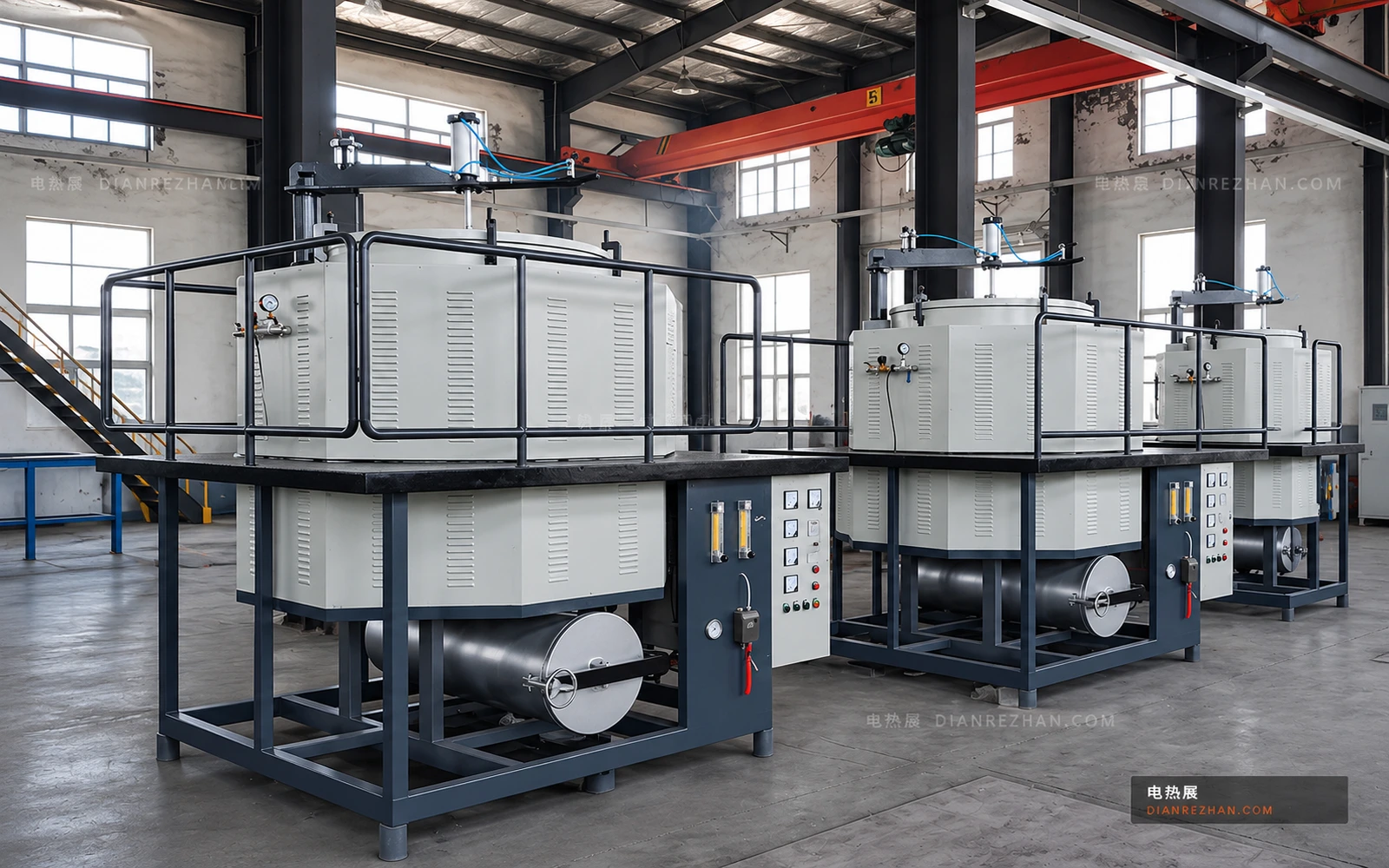
Vertical workshop arrangement
01

Vertical workshop arrangement

A workshop arrangement showing platforms, lift lids and bottom collectors. Check lifting and maintenance clearance.

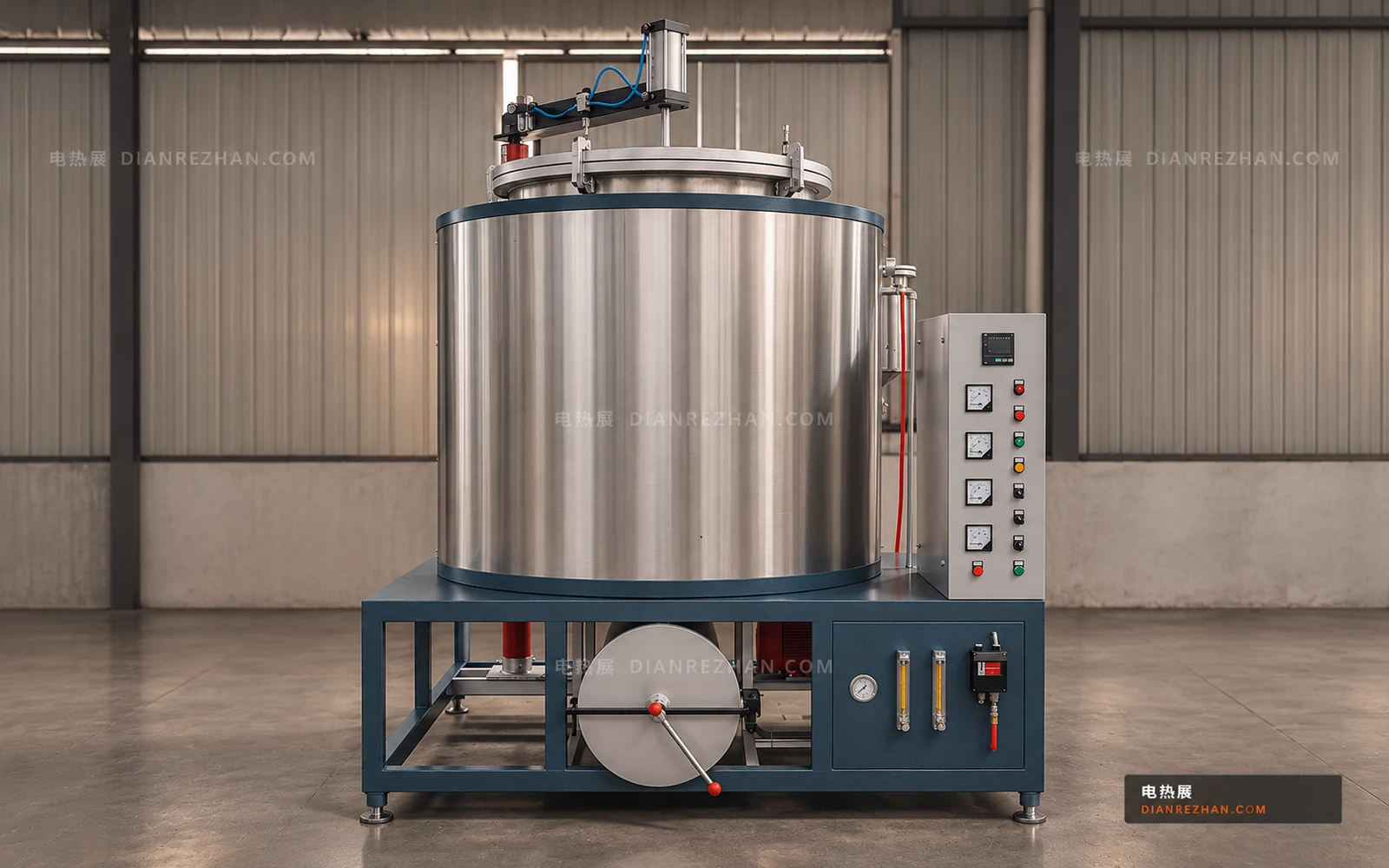
Vertical unit and controls
02

Vertical unit and controls

The relative positions of the chamber, collector and control cabinet. Confirm operating and access space.

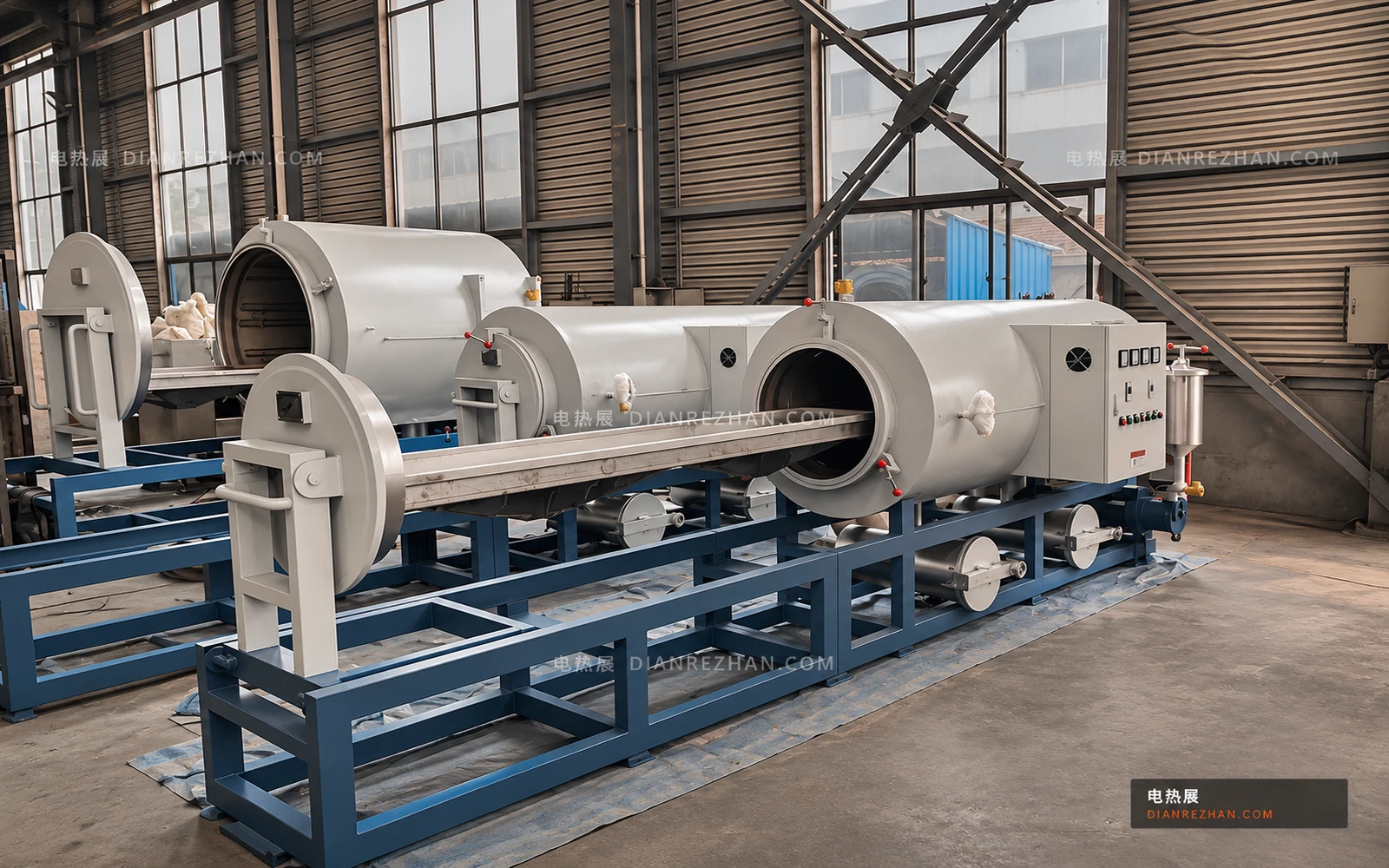
Horizontal rail loading
03

Horizontal rail loading

The loading relationship between the door and rails. Check usable chamber length and carriage withdrawal clearance.

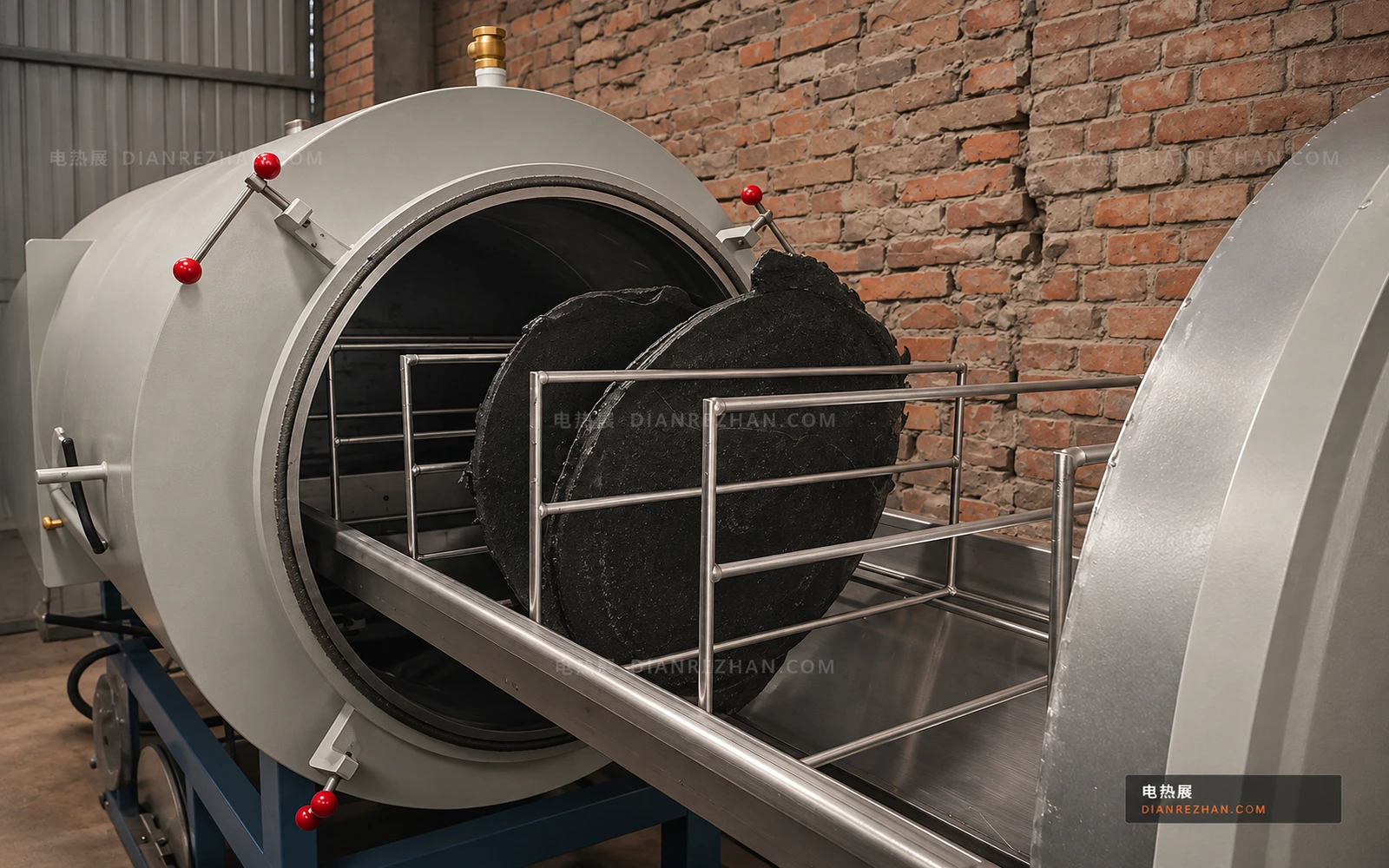
Horizontal loading reference
04

Horizontal loading reference

The relationship between the load frame and chamber entrance. Component material, residues and loading method require separate review.

Based on supplied photographs, with lighting, paint-color and presentation edits. These are equipment and layout references, not claims about a specific customer project or cleaning result.

YOUR PROCESS

Share the cleaning duty for review

Start with residue and component data; uncertain inputs can be completed later.

Enter and send requirements ↗

Open the main inquiry form